Walking into your house after a heavy July downpour and noticing a heavy, muggy smell hanging in the air is a common experience for property owners. Here in Mesa, people often think our dry desert climate protects us from mold problems. That is not true. When monsoon storms roll across the Valley or a supply line bursts under your sink, moisture gets trapped fast. Classic Restoration sees it all the time on jobs across local neighborhoods like Las Sendas or older properties down near Lehi, where water damage hides behind drywall, and mold follows close behind.
Understanding how our local weather influences water damage and subsequent mold growth can save you thousands of dollars. Mold does not care that outside humidity is low. It thrives wherever there is stagnant moisture, and it can start colonizing within 24 to 48 hours of a leak.
Timing Your Water Damage Response
Homeowners cannot afford to wait around when water gets into floors or walls. If a monsoon roof leak drips into your attic insulation or a supply line fails, the clock starts ticking immediately. Here is what you need to keep in mind for scheduling help:
- Call for professional Water Damage Restoration the same day a flood or major leak happens.
- Schedule a moisture inspection if you smell mustiness after a heavy storm, even if walls look dry on the surface.
- Address small plumbing leaks immediately rather than letting them wick up into baseboards during the dry months.
Classic Restoration gets calls right after severe weather hits. The biggest mistake homeowners make is letting damp drywall or saturated carpet sit until they have time to deal with it. In our climate, trapped moisture creates a microclimate inside your wall cavities that breeds mold rapidly.
How Weather Conditions Affect Remediation Work
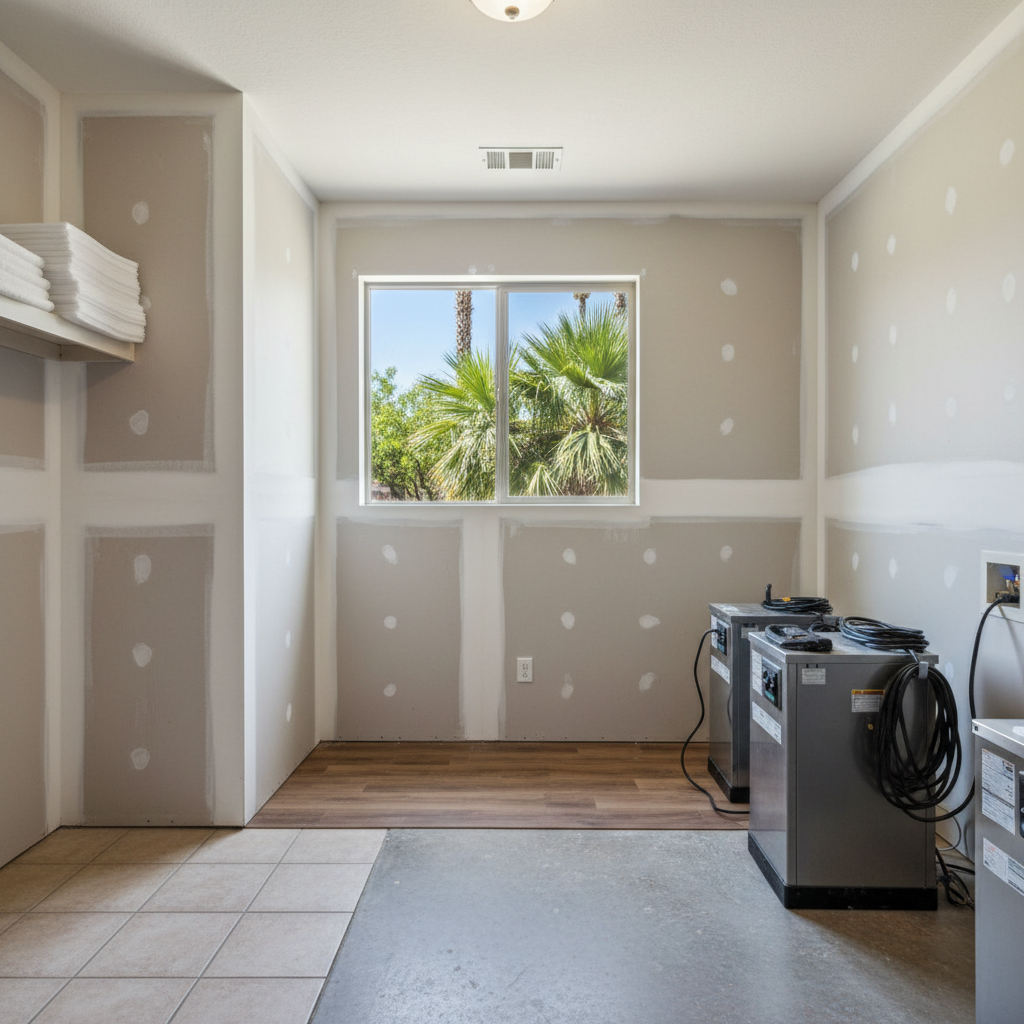
People assume that because Mesa runs hot and dry most of the year, drying out a structure is simple. Actually, our extreme summer temperatures complicate things. High outdoor heat can cause exterior walls to trap interior humidity if air conditioning units are not balanced correctly. When Classic Restoration sets up industrial dehumidifiers and air movers during a Water Damage Restoration project, our team has to fight both the standing water and the thermal envelope of the house.
During monsoon season, relative humidity spikes drastically for short windows. That ambient moisture slows down natural evaporation rates. If you try to open windows to air out a damp room after a summer storm, you might actually pull more humidity inside. Professional containment and specialized drying equipment are required to pull moisture straight out of framing, concrete slabs, and subfloors before mold takes root.
Protecting Your Property Year-Round
Keeping your home safe from water damage and mold requires staying ahead of seasonal shifts. You have to check your HVAC condensate lines every spring before the heavy cooling season kicks in. A clogged drain line in a Mesa attic can quietly dump gallons of water into your ceiling over a single weekend.
Inspect your roof flashing and exterior seals right before the monsoon winds arrive. Catching a tiny roof compromise early stops storm water from getting into your framing in the first place. If you do experience a pipe break or a sudden flood, make sure extraction and structural drying happen right away. Taking care of moisture problems early keeps your home healthy and protects your property for the long haul.